Inherited Farmland, Low Cash Rent & Too Many Owners: Is It Still Worth Keeping the Farm?

When farmland is passed down through generations, deciding what to do with it can be about much more than money. But when cash rent is low and ownership is split among multiple family members, it may be time to take a closer look at the numbers.
There is a conversation I have with inherited farmland owners more often than you might think.
A brother and sister inherited farmland from their parents. Or maybe a group of cousins owns land that belonged to their grandparents. Sometimes it is aunts, uncles, siblings, and cousins all sharing ownership of the same farm.
The farm has been rented to the same local farmer for 10, 15, or even 20 years. The relationship is good. The tenant has taken care of the ground, and the family appreciates having someone they know farming the land.
But there is one problem.
The cash rent has stayed low for years, and the income the family receives just doesn’t seem to be worth what it once was.
When I ask whether they have considered increasing the rent, I often hear something along these lines:
“We’ve always charged him a little less because we wanted to be fair. He’s farmed it for years, and we don’t want to take advantage of him. We don’t farm it ourselves, and we’re not even local anymore.”
That sentiment is understandable. These landowners aren’t trying to squeeze every last dollar out of their tenant. They want to do the right thing.
But sometimes, in trying to be fair to the farmer, they forget to ask an equally important question:
Are we being fair to ourselves and the other owners of this land?
If you have inherited farmland with family members and are facing this same dilemma, here are a few things worth considering.
1. When cash rent is split among family members, the numbers can look very different
One of the biggest things I encourage inherited farmland owners to do is look at the actual income each owner receives not just the total amount of cash rent collected.
Let’s say your family owns 160 acres of farmland. The farm is rented for $200 per acre, generating $32,000 in gross annual rent.
That might sound like a substantial amount of income.
But what happens when that income is split among eight owners?
Each owner receives $4,000 per year before their share of property taxes, insurance, other expenses, and income taxes.
Now, let’s say comparable farms in your area support a cash rent of $275 per acre. At that rate, the same 160 acres would generate $44,000 annually.
That’s a $12,000 difference in gross annual income, or an additional $1,500 per owner each year when divided equally among eight owners.
Here’s how the numbers compare:
| Current rent | Illustrative higher rent | |
|---|---|---|
| Rent per acre | $200 | $275 |
| Total annual rent | $32,000 | $44,000 |
| Annual income per owner (8 owners) | $4,000 | $5,500 |
These figures are hypothetical examples, not a recommendation for what your farm should rent for. Actual market rent depends on the farm’s location, soils, productivity, lease terms, and other factors.
An additional $1,500 per year may not seem life changing to every owner. But it could help cover retirement expenses, pay down debt, or fund other financial goals.
And if the rent is significantly below the market, the difference could be even more meaningful.
The point isn’t that every farm should command the highest possible rent. The point is that families should understand what their land could reasonably earn before deciding whether the current arrangement still makes sense.
2. You can appreciate your longtime tenant without charging below-market rent forever
This is often the hardest part of the conversation because it isn’t just about dollars and cents.
Maybe your dad rented the farm to the same farmer for 25 years. Maybe that farmer helped your parents when they needed it. Maybe you grew up watching him work the fields, and he feels like part of the family.
You want to honor that relationship.
And you can.
Being a fair landowner doesn’t mean you have to keep the rent at the same rate indefinitely. It means establishing reasonable terms that work for both parties.
Farmland ownership comes with real costs and responsibilities. Property taxes, insurance, repairs, drainage issues, and other expenses can affect the owner’s return. Meanwhile, the farmer needs a lease arrangement that makes sense for their operation, too.
The goal is to find a reasonable balance.
If you haven’t reviewed your cash rent in several years, consider obtaining an updated market analysis. Look at comparable cash rents in your area, the productivity of your particular farm, and the terms of your existing lease.
Then have an honest conversation with your tenant.
You may find that a gradual rent adjustment is appropriate. You might negotiate a new lease that gives both parties greater certainty. Or you may discover that the farmer cannot justify paying what you need to make ownership worthwhile.
That last possibility is important.
If the current tenant cannot afford a reasonable market rent, you may have to decide whether keeping the farm under those circumstances still fits your financial goals.
You can respect a farmer who has rented your family’s land for decades without making a financial commitment that no longer works for you.
Gratitude for a longtime tenant and responsible management of inherited assets can coexist.
3. What does keeping the farm actually cost you?
When families talk about their cash rent, they often focus on the gross income.
But gross income isn’t the same as what you keep.
Before deciding whether the farm is worth holding, look at the bigger picture:
- Property taxes: How much does your family pay each year?
- Insurance and other expenses: What does it cost to maintain ownership?
- Repairs and improvements: Are there drainage, tiling, fencing, or other expenses that could arise?
- Ownership structure: How many owners share the income, and are expenses divided in the same proportions?
- Time and management: Who handles lease negotiations, paperwork, tenant communication, and family decisions?
- Future needs: Will any owners need access to this money for retirement, debt repayment, or other priorities?
A farm can generate positive cash flow and still fail to meet an owner’s financial expectations.
For example, one family member may be happy receiving a few thousand dollars annually because they value owning the land for the long term. Another owner may be nearing retirement and need more income now. A third may have outstanding debt and would benefit more from receiving a share of the sale proceeds.
None of those perspectives is necessarily wrong.
But when several people own the same property, it’s important to understand how the arrangement affects everyone—and whether the family can agree on a plan that works for the group.
4. At what point should you consider selling inherited farmland?
For many families, selling the farm feels like the last thing they want to consider.
The land may have been in the family for generations. It represents years of hard work, memories of parents and grandparents, and a connection to a place that will always matter.
Selling can feel like letting go of something much bigger than real estate.
But keeping inherited farmland is also a financial decision.
If the cash rent is low, the ownership is divided among many people, and the annual income doesn’t meaningfully contribute to each owner’s financial life, it may be worth asking whether the land is still serving its purpose.
Consider a few questions:
- Are we keeping the farm because it supports our financial goals, or because we’re afraid of the guilt associated with selling?
- Does the annual income justify the costs and responsibilities of ownership?
- Do all the owners want to keep the land, or do some need the money for their own financial priorities?
- Would selling allow us to pay off debt, strengthen retirement savings, or reduce financial stress?
- If we keep the farm for another 10 or 20 years, what do we hope to accomplish?
There isn’t one right answer.
Some families have the financial flexibility to hold their land for another generation. Others would benefit from selling and putting their share of the proceeds toward their own future.
And sometimes, the biggest challenge isn’t whether the farm should be sold. It’s getting several family members to agree on what comes next.
That is why it’s helpful to evaluate the property objectively before making a decision based solely on emotion or tradition.
5. Compare the income from keeping the farm with the potential proceeds from selling
One of the most useful exercises you can do is compare what you currently earn from the farm with what you might receive if you sold it.
Let’s continue with our hypothetical example of 160 acres.
Assume the farm generates $32,000 in annual gross rent. If eight owners share that income equally, each receives $4,000 per year before expenses and taxes.
Now imagine the farm could sell for $12,000 per acre.
The illustrative gross sale price would be $1,920,000. Divided equally among eight owners, that would be $240,000 per owner before selling costs, any applicable taxes, debt, and other adjustments.
That is a very different financial picture from receiving $4,000 in gross annual rent.
Of course, the comparison isn’t as simple as saying that selling is better.
Farmland can appreciate in value, and keeping it may provide long-term income, diversification, and the opportunity to pass the land to another generation. Selling also means giving up future rent and potential appreciation. The actual net proceeds will depend on the transaction and each owner’s circumstances.
But it’s worth asking what that capital could do for you.
Could it eliminate a mortgage or other debt? Could it help fund retirement? Could it be invested to generate income? Could it give several family members more financial flexibility at a stage of life when they need it?
For some owners, keeping the farm will remain the best decision. For others, selling may provide opportunities that the current rental arrangement simply cannot.
The important thing is to make the comparison using realistic numbers rather than assumptions.
6. You don’t have to make the decision alone or all at once
If your family is struggling with whether to keep or sell inherited farmland, start by gathering the facts.
First, determine what the farm is worth in today’s market. Then review the current cash rent and compare it with reasonable local market rates.
Next, calculate the income each owner actually receives after expenses. If the farm is underperforming, explore whether renegotiating the lease could improve the situation.
Finally, consider the potential sale proceeds and discuss what keeping or selling would mean for the different owners.
You may want to involve a farmland real estate professional, accountant, financial adviser, or attorney, depending on the questions your family needs to resolve. Tax consequences, ownership agreements, lease obligations, and the rights of co-owners can all affect your options.
And remember: you don’t necessarily have to jump straight from low cash rent to selling the farm.
There may be other possibilities, including negotiating a new lease, establishing a longer-term rental agreement, or discussing whether one family member wants to buy out the others. The right approach depends on the ownership structure, family goals, and financial circumstances.
What matters most is that the decision is intentional.
Your family’s legacy matters. So does your financial future.
If you inherited farmland, you are carrying something valuable forward from the generations before you.
But honoring that legacy doesn’t require you to keep the land under the same arrangements forever.
Your parents or grandparents may have been happy with the rent they received decades ago. Your family may have continued that arrangement out of loyalty, gratitude, or a desire to avoid conflict.
Those are understandable reasons. But circumstances change.
The number of owners changes. Financial needs change. The cost of owning land changes. And the farmland market changes, too.
You are allowed to revisit the arrangement.
You are allowed to ask whether the rent is fair.
You are allowed to consider whether selling could help you build a stronger financial future.
And you are allowed to make a decision that honors your family’s history while also recognizing the needs of the people who own the land today.
The goal isn’t always to sell the farm. The goal is to make sure you’re keeping it for the right reasons.
If your family owns inherited farmland and you’re unsure whether your current cash rent is fair or whether it makes more sense to keep or sell the property start with the numbers. Understanding your options is the first step toward making a confident decision.
Have questions about inherited farmland, cash rent, or deciding whether to keep or sell? I’m passionate about helping landowners understand their options so they can make informed decisions about the land their families worked hard to build.
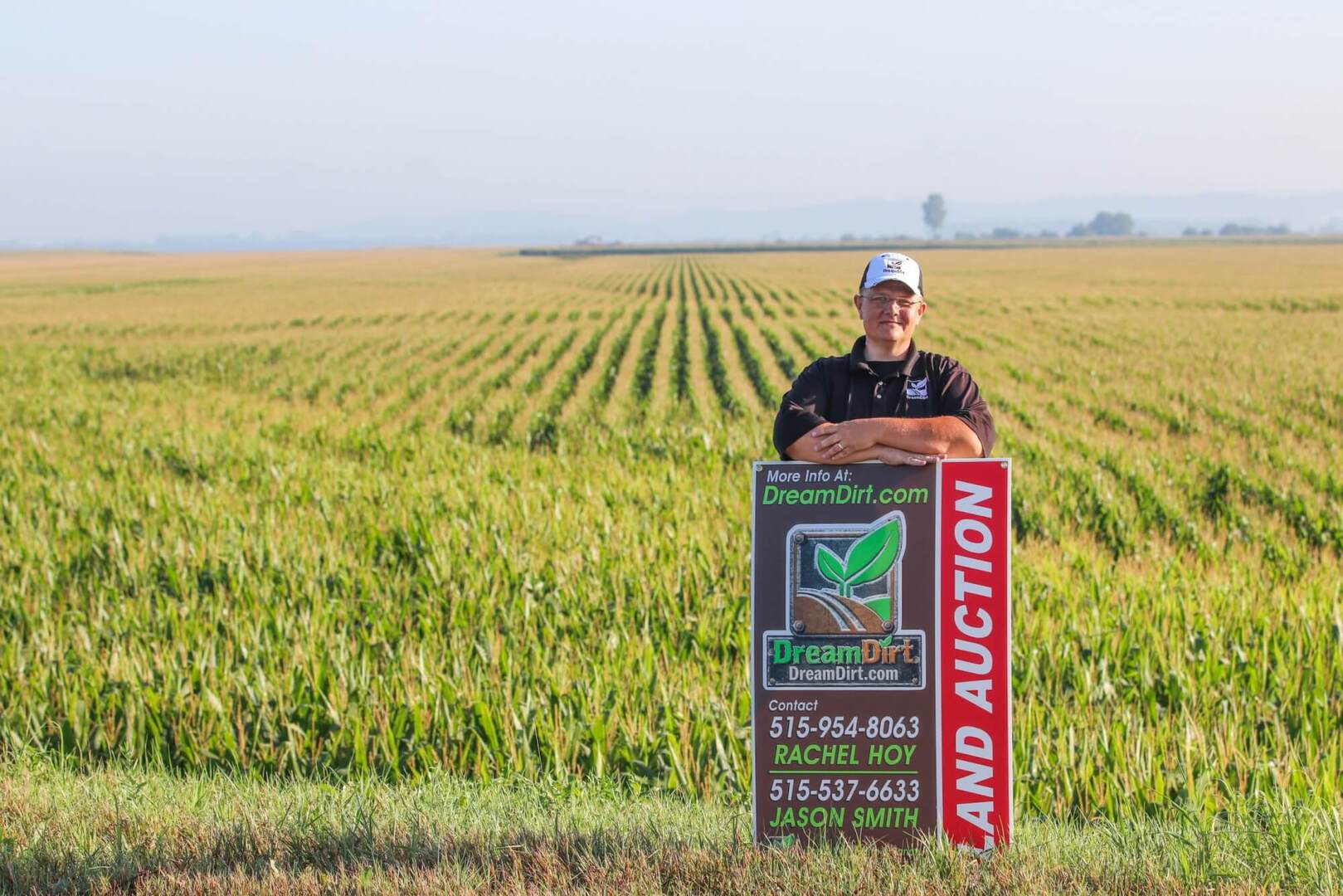
Jason J Smith
Auctioneer & Land Broker
Jason Smith is an experienced farmland broker and auctioneer with extensive experience helping landowners sell farmland across the Midwest. As the founder of DreamDirt and a licensed real estate broker and auctioneer, Jason has worked with hundreds of landowners to navigate farmland sales and create advantageous outcomes.
If you're considering selling farmland, schedule a confidential consultation with Jason to discuss your property, current market conditions and your selling options.
Phone: 515-537-6633 Email: Jason@dreamdirt.com
READY TO SELL YOUR IOWA FARMLAND?
October through year-end auction dates are being scheduled now.
Let’s talk about your farm. Call us at 641-423-6400 or email Jason@dreamdirt.com
Request a Free Valuation for Your Farm or Land Property
Whether you’re ready to start the selling process, or even remotely curious, we will gladly provide you with a FREE Market Analysis! If you are in a position to sell land in the Midwest, we want to help you achieve the top of the market on your sale.
October 2026 Iowa Farmland Auction Results & Land Values
October 2026 Iowa Farmland Auction Report: What Is Land Selling For, and Should You Sell Now or Wait Until Spring? Iowa farmland continues to attract strong buyer interest, but October's auction results reveal an increasingly selective market. While high quality farms...
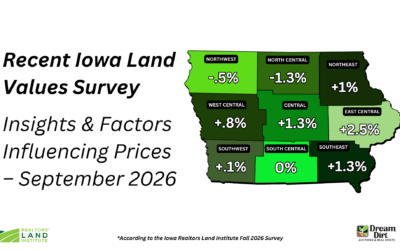
Should You Sell Your Iowa Farmland Before the End of 2026?
Iowa farmland values remain strong heading into the end of 2026, but with changing market conditions, higher borrowing costs, and increasingly selective buyers, many landowners are asking the same question: Is now a good time to sell farmland in Iowa? The short...
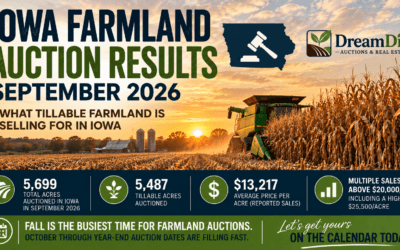
September 2026 Iowa Farmland Auction Results: What Are Iowa Farms Selling For?
September brought some impressive Iowa farmland sales, with several high-quality farms selling for more than $20,000 per acre. So what do the latest auction results tell us about the Iowa farmland market and what could your farm be worth? For farmland owners, looking...