
Should You Sell Your Iowa Farmland Before the End of 2026?
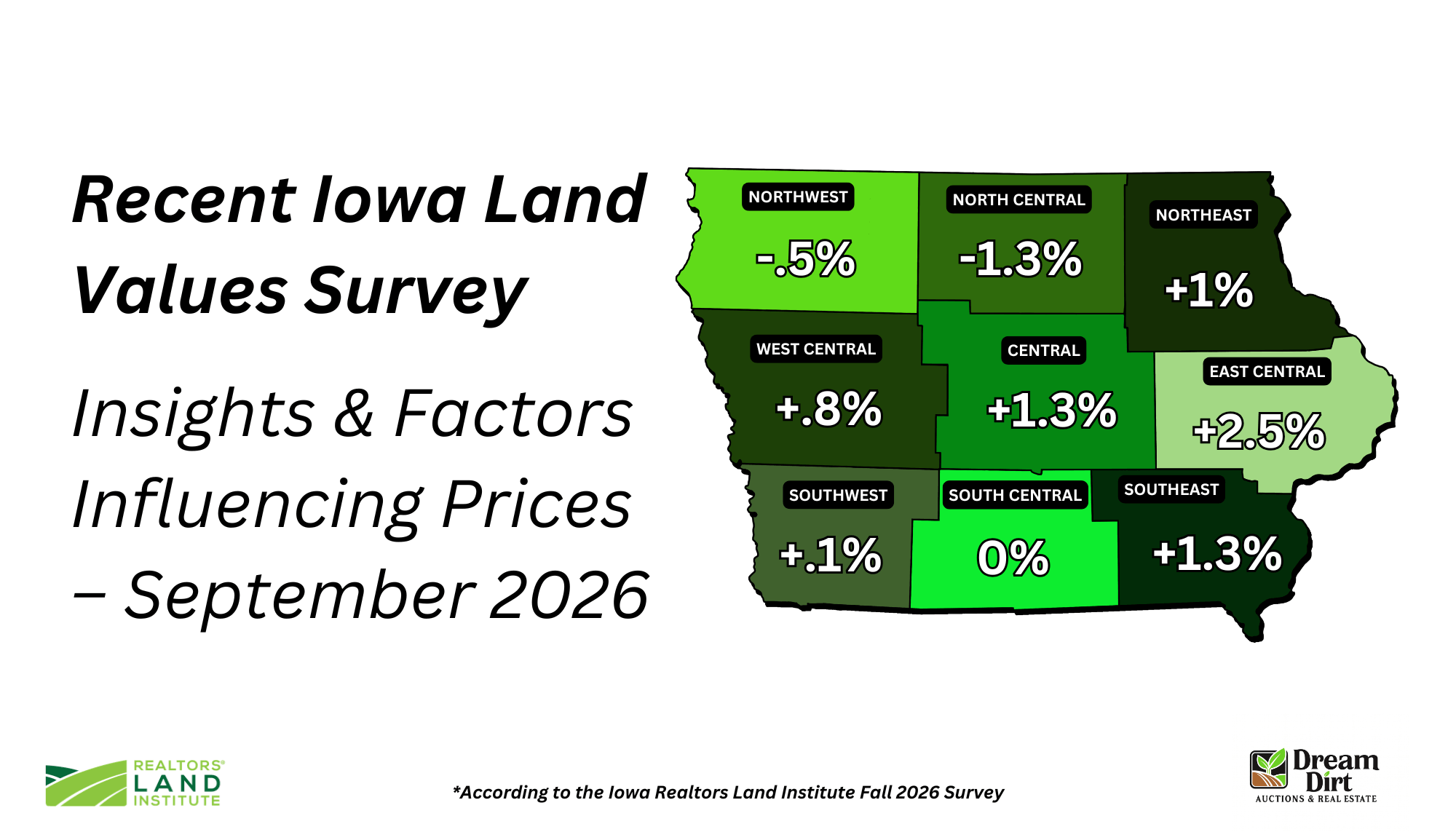
Iowa farmland values remain strong heading into the end of 2026, but with changing market conditions, higher borrowing costs, and increasingly selective buyers, many landowners are asking the same question: Is now a good time to sell farmland in Iowa?
The short answer? For many landowners, the end of 2026 may present a good opportunity to sell. Especially if you own desirable farmland and have a reason to turn your land into cash. However, the right decision depends on your property’s characteristics, your financial goals, and what you expect from farmland ownership in the years ahead.
The latest Iowa farmland value survey shows a market that remains relatively stable, while recent auction results demonstrate that buyers are still willing to pay strong prices for quality farms. At the same time, economic uncertainty and more selective buyers mean landowners should carefully evaluate their options rather than assume prices will continue rising.
If you’ve been thinking about selling your Iowa farmland, here’s what to consider before the end of the year.
Iowa Farmland Values Remain Strong in 2026
One of the biggest factors to consider when deciding whether to sell is the current direction of farmland values.
According to the September 2026 REALTORS® Land Institute (RLI) – Iowa Chapter Land Trends & Values Survey, Iowa farmland values increased 0.6% over the previous six months and 1.9% over the past 12 months.
The survey reported the following statewide values:
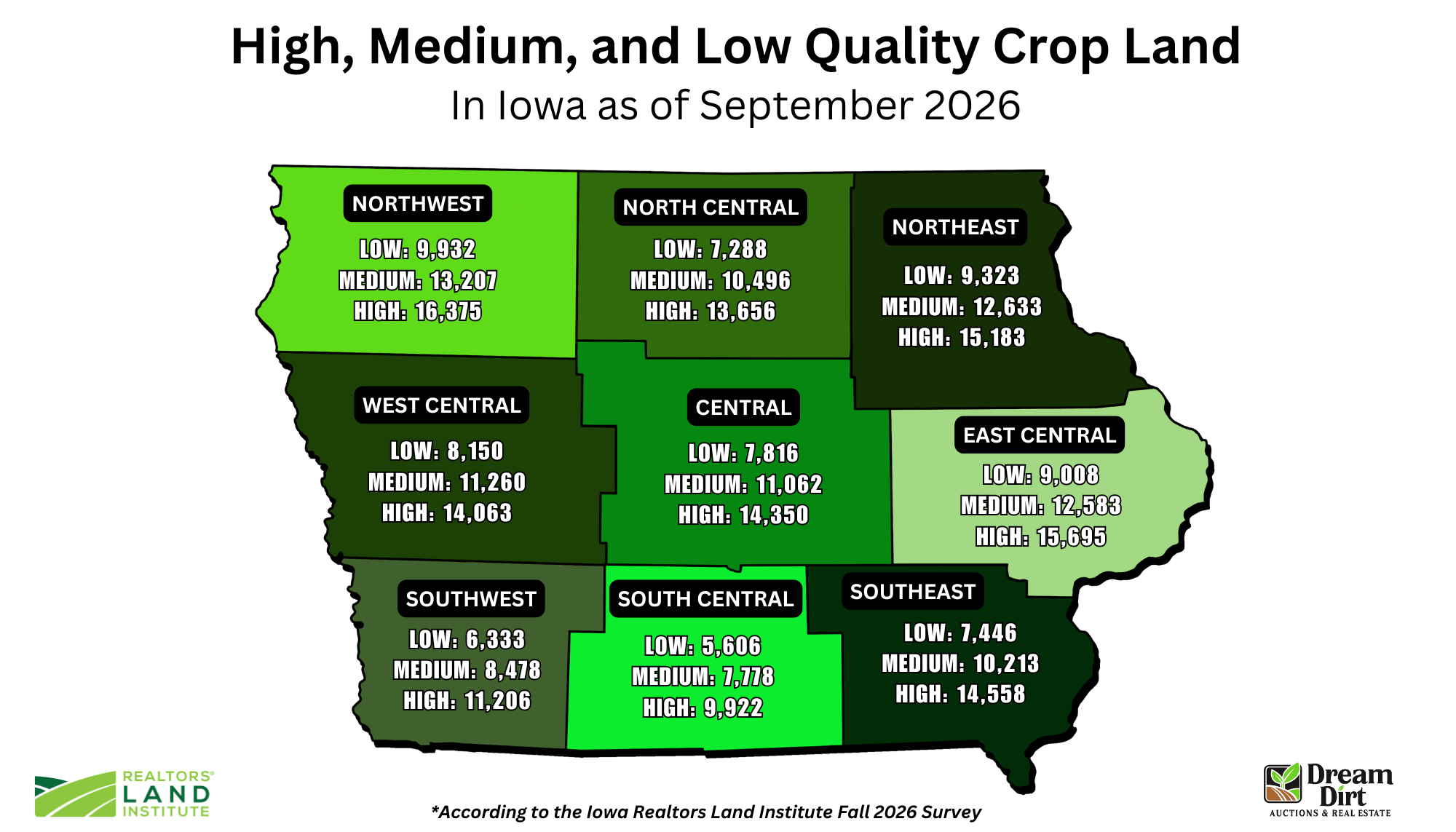
- High-quality cropland: $13,890 per acre
- Medium-quality cropland: $10,857 per acre
- Low-quality cropland: $7,878 per acre
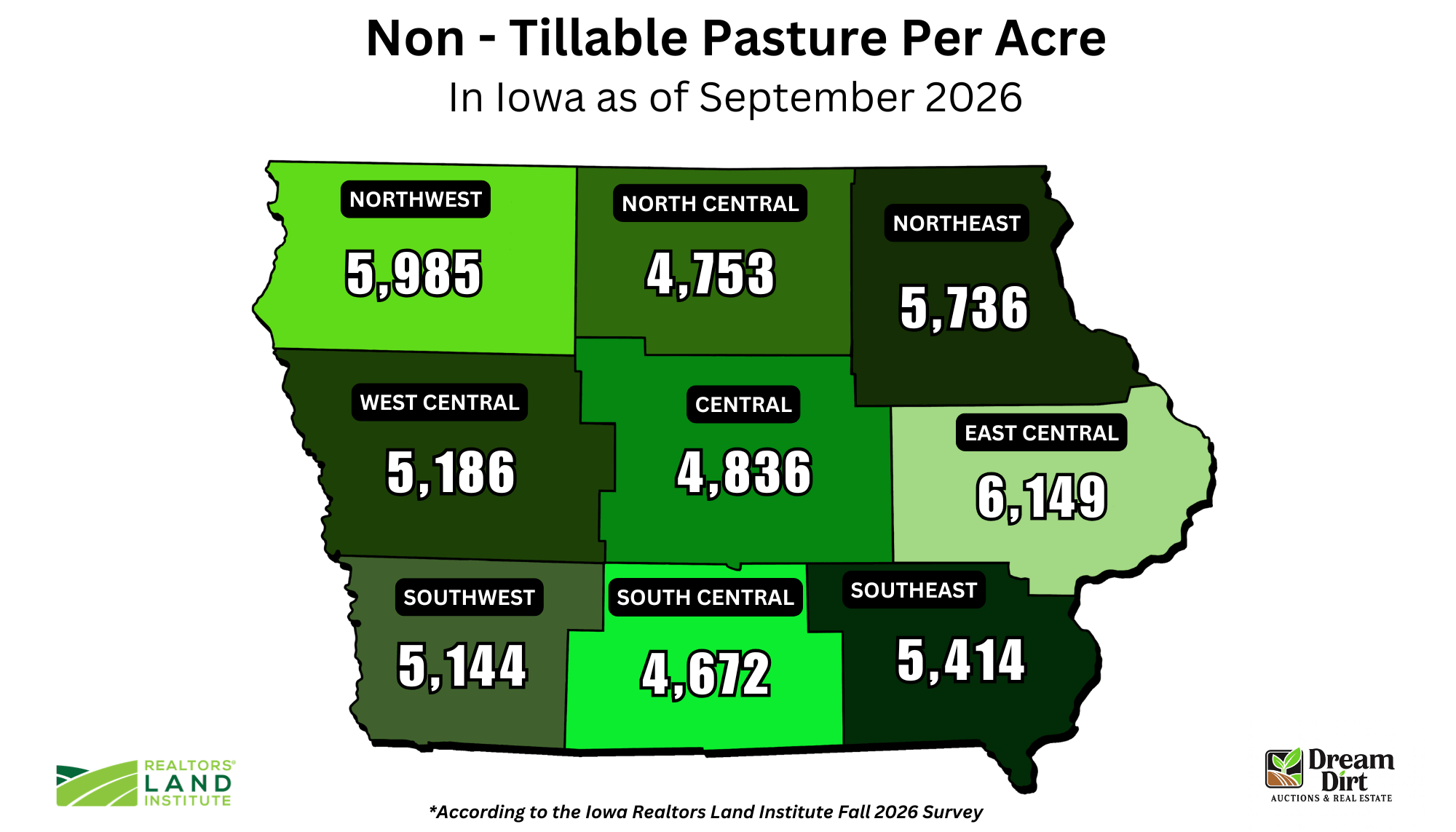
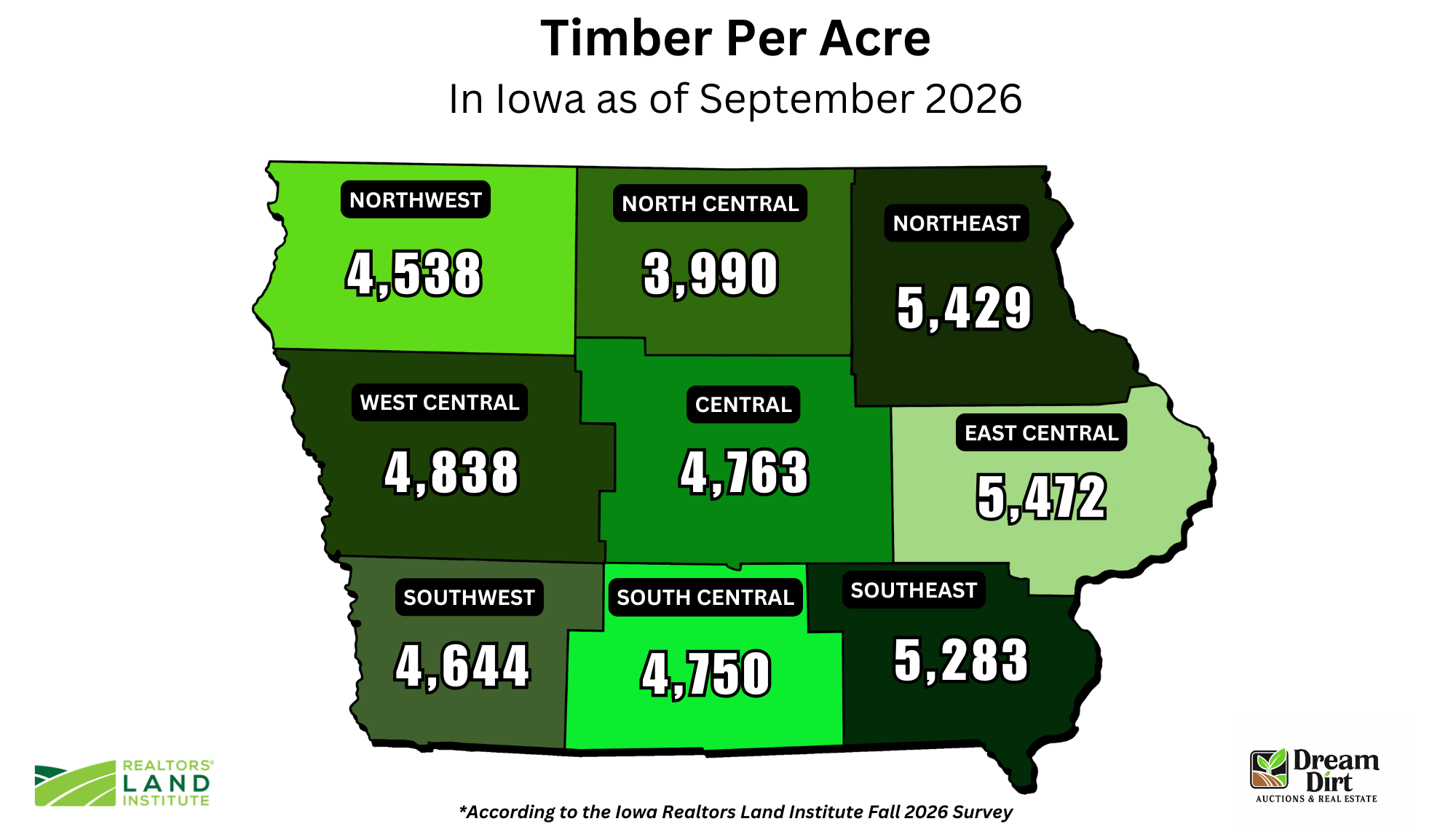
These figures are statewide survey estimates, not guaranteed selling prices for individual farms. Actual values depend on soil productivity, location, drainage, tract size, land use, and other property specific characteristics.
The takeaway is that Iowa farmland values have remained relatively stable, with modest appreciation over the past year.
For landowners who have been waiting for a favorable opportunity to sell, today’s market provides a reason to review what their farm could realistically bring.
What Are Iowa Farms Actually Selling For?
Survey estimates help explain broad market trends, but actual sales provide another important piece of the puzzle.
September 2026 Iowa land auction results included farms selling at a wide range of prices, demonstrating how much property characteristics can influence value.
Some notable sales included:
| County | Acres | Sale Price Per Acre |
|---|---|---|
| Sioux | 67.00 | $25,500 |
| Jones | 172.48 | $23,550 |
| Sioux | 80.00 | $23,000 |
| Chickasaw | 74.32 | $18,100 |
| Osceola | 80.00 | $17,900 |
| Mitchell | 154.70 | $17,300 |
These sales show that buyers are still willing to compete for desirable Iowa farmland.
However, not every property is selling at the high end of the market. September’s disclosed-price sales ranged from $7,271 to $25,500 per acre.
That difference reinforces an important point: the value of your farm depends on more than the statewide average.
If you’re considering selling, recent comparable sales in your county and surrounding area are a better starting point than assuming your property will bring the same price as a highly productive farm elsewhere in Iowa.
Buyers Are Still Active, but They’re Becoming More Selective
One of the most important trends heading into the end of 2026 is the difference between desirable farms and properties with limitations.
The September RLI survey reported that buyers remain active but are more selective about the farms they pursue. Buyers are still paying healthy prices to compete for desirable properties, while discounting shortcomings more heavily than they may have in previous years.
What does that mean for sellers?
A farm with strong CSR2 ratings, good drainage, convenient access, and a desirable location may attract significant interest. A property with lower productivity, access concerns, drainage issues, unusual tract configurations, or other limitations may face more scrutiny.
This doesn’t mean a farm with challenges won’t sell. It means that understanding those characteristics and pricing the property appropriately is increasingly important.
For landowners, the opportunity is still there but preparation, marketing, and an informed selling strategy matter.
What Could Affect Farmland Values in the Months Ahead?
No one can predict exactly where Iowa farmland values will be in 2027. Several factors could influence the market as we move beyond the fall selling season.
Commodity Prices and Farm Income
Commodity prices influence farm income and, in turn, what many buyers can justify paying for farmland.
Cash prices were approximately $5.09 per bushel for corn and $12.76 per bushel for soybeans as of September 30.
Stronger crop prices and good yields can support buyer confidence. However, production costs and farm profitability also matter when buyers evaluate a potential purchase.
Interest Rates and Borrowing Costs
Higher borrowing costs can affect how much buyers are able or willing to pay.
Even when farmland values remain strong, financing costs can influence purchasing power and investment decisions. This is one reason a stable market doesn’t necessarily mean every property will attract aggressive bidding.
The Amount of Land Coming to Market
The fall selling season typically brings more farmland to market, giving buyers more properties to compare. For sellers, that means having a clear marketing strategy and a plan to stand out from competing farms is especially important.
An auction can create a sense of urgency by establishing a definitive date and time for buyers to submit their bids. Rather than leaving a property listed for an indefinite period with no set deadline for offers, an auction gives interested buyers a clear timeline and an opportunity to compete against other bidders.
When multiple buyers are interested in the same farm, that competition can help drive the price higher. A well planned auction also gives buyers a defined opportunity to evaluate the property, complete their due diligence, and make their best bid by the deadline.
By contrast, a traditional for sale by owner listing without a defined offer deadline may leave buyers uncertain about when they need to act. Some may take their time evaluating the property or wait to see whether the seller will reduce the asking price.
An auction isn’t a guarantee of a higher sale price, and results depend on factors such as buyer demand, marketing, property characteristics, and auction terms. However, a competitive bidding process with a clear deadline can be an effective way to create urgency, encourage buyers to act (especially while there are other farms on the market in the area), and give sellers a structured path to a sale.
For landowners entering a market with more competing properties, choosing the right selling method can make an important difference.
Should You Sell Your Iowa Farmland Before the End of 2026?
There isn’t one answer for every landowner. However, there are several situations where exploring a sale before year end could make sense.
1. You’ve Already Been Considering Selling
If selling has been on your mind for the past year or two, this may be a good time to evaluate your options.
Farmland values remain relatively strong, and buyers are still competing for desirable properties. You don’t necessarily need to wait for a dramatic increase in prices if today’s potential sale value would accomplish your goals.
2. You’re Planning for Retirement
Farmland can be a valuable source of long-term income and wealth, but retirement planning sometimes means converting an asset into cash.
Selling may provide funds for next year’s retirement, diversify investments, reduce financial obligations, or simplify estate planning. The decision should account for the farm’s income potential, taxes, and your long-term financial needs.
3. You’re Settling an Estate or Dividing Family Property
Inherited farmland can create difficult decisions, particularly when multiple heirs have different financial needs or opinions about retaining the property.
A sale can provide a way to divide proceeds among heirs, resolve ownership disagreements, or simplify an estate. However, retaining the farm may also make sense when heirs share a long-term ownership goal.
The important step is understanding the property’s current market value and the available options before making a decision.
4. You Want to Reduce Risk or Diversify
Farmland is a significant investment, and some owners have a large portion of their wealth tied up in a single property.
Selling some or all of a farm may allow an owner to diversify investments, pay off debt, fund another purchase, or access capital for other goals.
Whether that makes sense depends on the farm’s income, your financial circumstances, and the costs associated with selling.
5. You Own Highly Desirable Farmland
The September sales demonstrate that strong prices are still possible for desirable properties.
If your farm has productive soils, strong CSR2 ratings, good access, and other attractive characteristics, it may be worth exploring what buyers would pay in the current market.
That doesn’t guarantee a particular price, but it can help you make a more informed decision about whether to sell now or continue holding the property.
When Might It Make Sense to Hold Your Farmland?
Selling isn’t automatically the right move just because values remain strong.
Holding may make sense if your farm generates attractive annual income, you don’t need to access the equity, or your family intends to retain the property for future generations.
You may also want to evaluate the tax consequences of selling before making a decision. Depending on your circumstances, capital gains taxes, estate planning considerations, and other tax issues can significantly affect the net proceeds from a sale.
A farm that provides consistent cash rent and fits your long term plans may be worth holding, even when the market offers an attractive selling opportunity.
The goal isn’t simply to sell at the highest possible price. It’s to make the decision that best fits your financial and family goals.
Before making a major decision, consider consulting your tax professional and financial or legal advisers about the implications of selling or retaining the property.
Should You Wait Until 2027 to Sell?
This is one of the biggest questions landowners face as the year comes to a close.
Could farmland values increase in 2027? Yes. Could values remain relatively flat or soften? That’s also possible.
The September RLI survey described the market as stable, with a slight bias toward stronger values in much of the state. Improved commodity prices and yield expectations offered support, while higher interest rates and input costs remained potential headwinds.
Those competing factors make it difficult to confidently predict where farmland values will go next.
Waiting may make sense if you have a strong reason to hold your property. But waiting solely because you expect prices to rise can be risky.
No one knows when the farmland market will reach its next peak until that point has passed.
Instead of trying to time the absolute top, consider whether a sale at today’s potential market value would accomplish what you want to do with the land.
If the answer is yes, it may be worth exploring a sale now rather than postponing the decision based on an uncertain forecast.
Why a Current Farmland Valuation Matters
Before deciding whether to sell, you need a realistic understanding of what your farm could bring in today’s market.
Statewide averages provide useful context, but they can’t account for every characteristic that affects an individual property.
A current market analysis should consider:
- Recent comparable farmland sales in your area
- CSR2 ratings and soil productivity
- Tillable acres and other land uses
- Drainage, access, and field configuration
- Current cash rent and income potential
- Local buyer demand and competing properties
- The property’s suitability for an auction or other selling strategy
The September 2026 sales ranged from $7,271 to $25,500 per acre. That wide range demonstrates why a general statewide number isn’t enough to determine what your farm is worth.
Is the End of 2026 a Good Time to Sell Iowa Farmland?
For many landowners, the end of 2026 is a reasonable time to evaluate a sale. Farmland values remain relatively stable, buyers are still competing for quality farms, and the fall selling season brings an opportunity to reach active farmland buyers.
However, today’s market is not a guarantee of higher prices tomorrow. Buyers are becoming more selective, and interest rates, farm income, and the supply of available land will continue to influence the market.
If you’ve been thinking about selling, don’t make the decision based solely on headlines or statewide averages. Start by understanding what your farm could realistically sell for and whether that value supports your goals.
The best time to sell isn’t necessarily when prices are at their absolute peak. It’s when the market, your property’s value, and your personal circumstances align.
Thinking About Selling Your Iowa Farmland?
DreamDirt Farm & Ranch Real Estate & Auction works with farmland owners to evaluate their properties, review comparable sales, and develop a selling strategy based on current market conditions.
If you’re considering selling before the end of 2026, now is a good time to start the conversation. Auction dates and marketing timelines require planning, and getting an early start can help you understand your options before making a commitment.
Contact DreamDirt to discuss your farm and request a current market analysis.
Learn what your farmland may be worth, understand the available selling options, and make an informed decision about whether now is the right time to sell.
Jason J Smith
Auctioneer & Land Broker
Jason Smith is an experienced farmland broker and auctioneer with extensive experience helping landowners sell farmland across the Midwest. As the founder of DreamDirt and a licensed real estate broker and auctioneer, Jason has worked with hundreds of landowners to navigate farmland sales and create advantageous outcomes.
If you're considering selling farmland, schedule a confidential consultation with Jason to discuss your property, current market conditions and your selling options.
Phone: 515-537-6633 Email: Jason@dreamdirt.com
READY TO SELL YOUR IOWA FARMLAND?
October through year-end auction dates are being scheduled now.
Let’s talk about your farm. Call us at 641-423-6400 or email Jason@dreamdirt.com
Request a Free Valuation for Your Farm or Land Property
Whether you’re ready to start the selling process, or even remotely curious, we will gladly provide you with a FREE Market Analysis! If you are in a position to sell land in the Midwest, we want to help you achieve the top of the market on your sale.

August 2026 Iowa Farmland Prices: What the Latest Rural Mainstreet Index Means for Land Values
Iowa farmland prices continue to show resilience, but the latest Rural Mainstreet Index points to a more cautious outlook for the agricultural land market. The latest Creighton University Rural Mainstreet Index (RMI) provides an interesting look at the current health...
Iowa Farmland Auction Results: What Is Tillable Farmland Selling For in 2026?
Iowa Farmland Auction Results: What Is Tillable Farmland Selling For in 2026? If you own Iowa farmland and have been wondering what your ground could bring in today’s market, recent auction results provide some useful insight. August 2026 was a particularly active...

What I’ve Learned From 1,000+ Farmland Auction Clients
What I’ve Learned From Working With More Than 1,000 Farmland Auction Clients There is one sentence I've heard probably more than any other in 25 years of selling farms: "I've never done this before." Of course you haven't. Most people will buy and sell quite a few...