Soil Productivity Ratings Explained: CSR2, PI, and What They Mean for Farmland Value
When it comes to selling farmland, one of the most misunderstood topics is soil productivity ratings.
A question I hear all the time from landowners is:
“If I take better care of my soil, will my productivity rating go up?”
The answer is simple: No.
But understanding why can help you make better decisions about managing and selling your land.
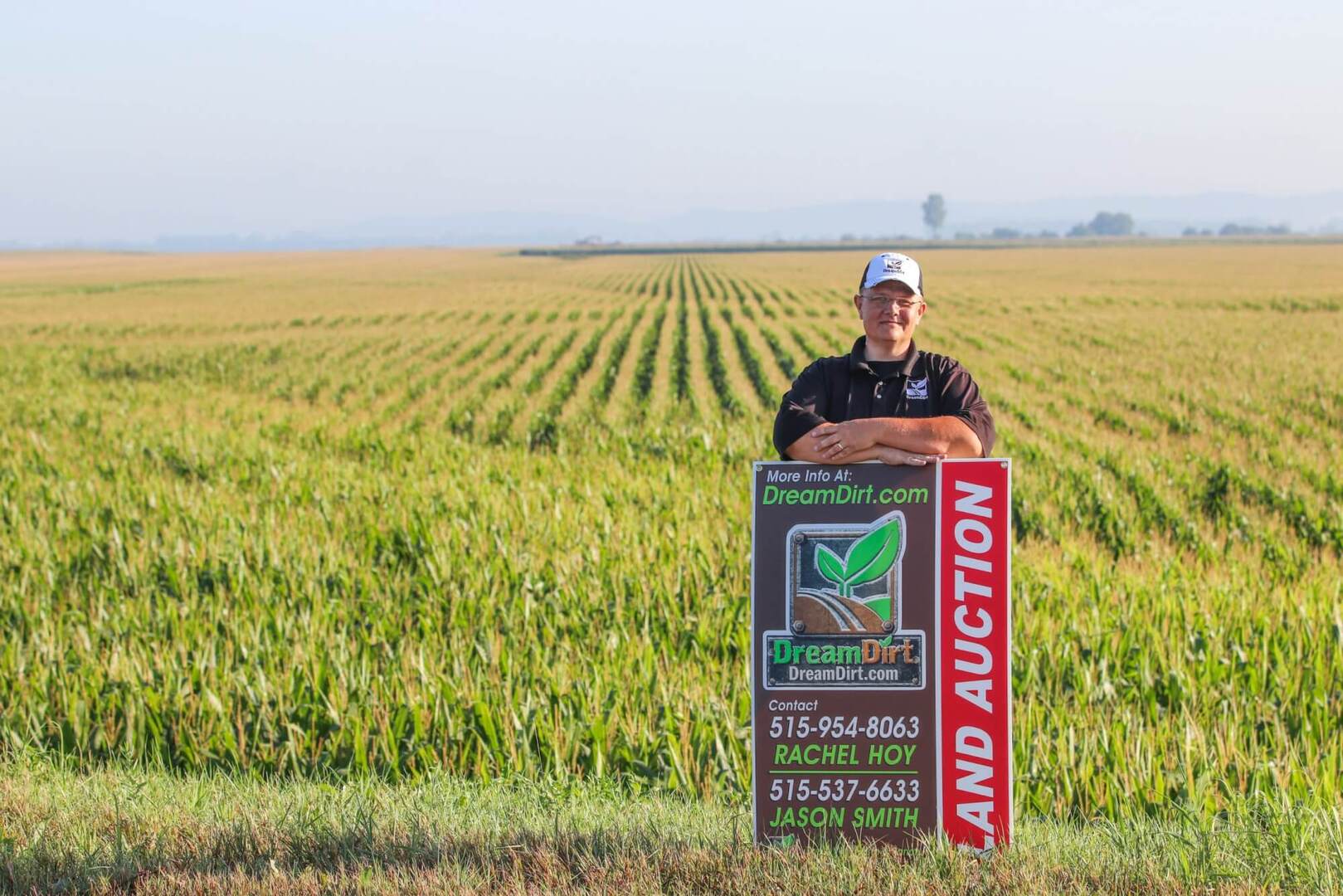
Jason J Smith
Auctioneer & Land Broker
Jason is an experienced farmland broker and auctioneer with extensive experience in farmland sales across this Midwest. Jason has worked with hundreds of clients to create advantageous outcomes. If you are selling land schedule a consultation with Jason by calling or using the calendar.
Phone: 515-537-6633 Email: Jason@dreamdirt.com
Soil Fertility vs. Soil Productivity: What’s the Difference?
Many people confuse soil fertility with soil productivity, but they are very different.
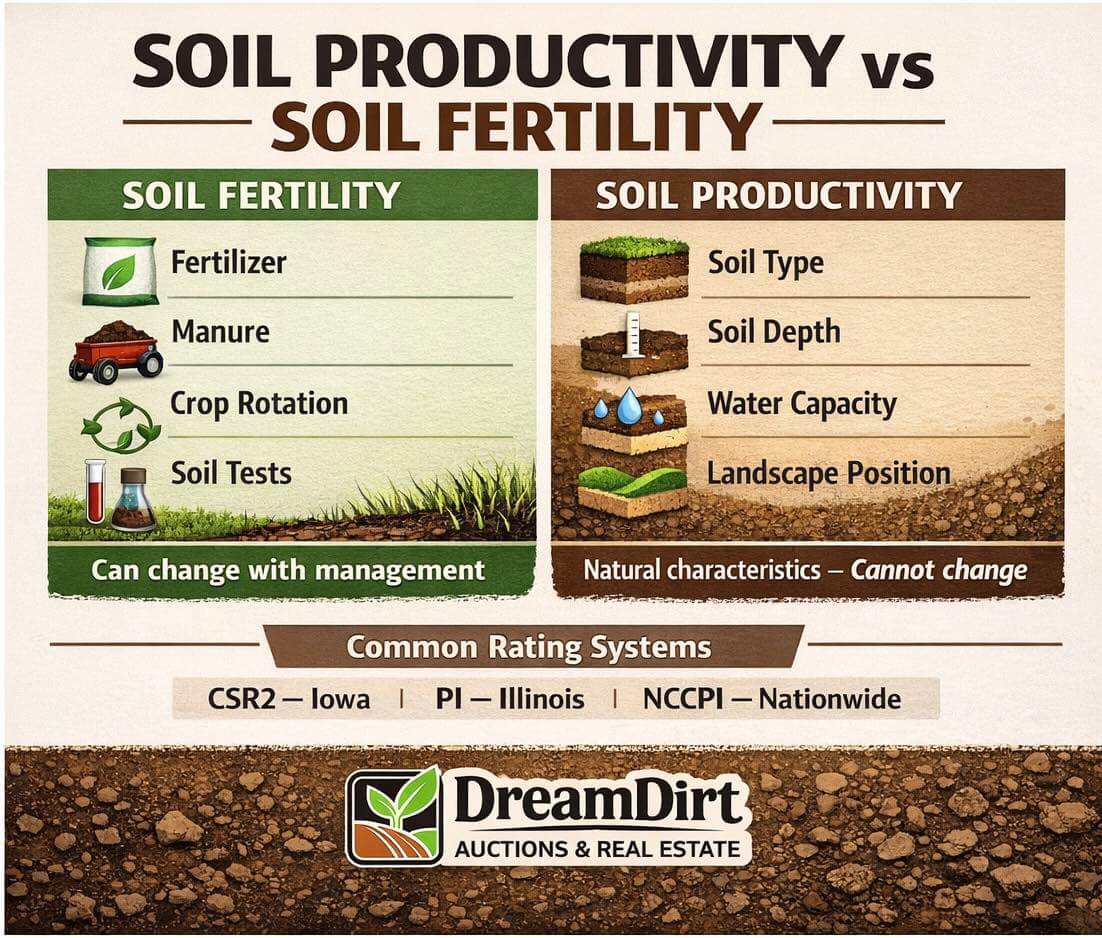
Soil fertility refers to the nutrients in your soil—nitrogen, phosphorus, potassium, and organic matter. This is something you can improve through:
-
Fertilizer applications
-
Manure
-
Cover crops
-
Crop rotation
-
Better management practices
Improving fertility can absolutely increase your yields.
Soil productivity, however, measures the natural ability of the soil to produce crops over time.
This includes factors like:
-
Soil type and structure
-
Topsoil depth
-
Water-holding capacity
-
Drainage
-
Slope and erosion risk
-
Landscape position
These are inherent characteristics—meaning they do not change with management.
👉 You can improve performance, but you cannot change the soil’s core productivity rating.
Iowa Farmland: Understanding CSR2
In Iowa, farmland is commonly evaluated using CSR2 (Corn Suitability Rating 2).
-
Scale: 5–100
-
100 = highest productivity soils
-
Based on soil type, slope, and moisture availability
-
Originally created for tax assessments
Today, CSR2 plays a major role in farmland sales.
In fact, many farms are discussed in terms of:
“Price per CSR2 point”
This gives buyers a quick way to compare land quality across different farms.
Illinois Farmland: Productivity Index (PI)
In Illinois, the standard is the Productivity Index (PI).
-
Scale: 0–147
-
Reflects long-term yield potential
-
Based on soil characteristics under good management
Higher PI ratings typically mean stronger income-producing potential over time.
Nationwide Comparison: NCCPI
The NCCPI (National Commodity Crop Productivity Index), developed by the USDA, allows for broader comparisons.
-
Scale: 0–1 (or 0–100)
-
Includes soil, climate, and landscape data
-
Used across the U.S.
While helpful, NCCPI is generally less precise than CSR2 or PI when evaluating local farmland.
Why Soil Productivity Ratings Matter When Selling Farmland
So why do these ratings matter so much?
Because they create a standardized way to compare farms.
Buyers use them to:
-
Quickly evaluate land quality
-
Estimate yield potential
-
Compare multiple properties
-
Determine competitive pricing
However, productivity ratings are just one piece of the equation.
Other factors that impact farmland value include:
-
Drainage systems (tile, improvements)
-
Field size and efficiency
-
Road access
-
Location
-
Market demand
-
Buildings and improvements
👉 A high CSR2 or PI is valuable—but it doesn’t tell the whole story.
Final Thoughts
Understanding soil productivity ratings can give you a major advantage—whether you’re managing your farm or preparing to sell.
Just remember:
-
Fertility can be improved
-
Productivity ratings cannot
-
Buyers rely on these ratings—but they also look beyond them
If you’re thinking about selling, positioning your farm correctly in the market is key.
Thinking About Selling Your Farmland?
If you’d like help understanding your farm’s value, soil ratings, and the best strategy to maximize your return, reach out anytime:
Jason Smith
Broker & Auctioneer
515-537-6633
Jason@dreamdirt.com
Our past auction results can be found here.
Request a Valuation for Your Farm or Land Property
Whether you’re ready to start the selling process, or even remotely curious, we will gladly provide you with a free consultaiton with a complementary Market Analysis! If you are in a position to sell land in the Midwest, we want to help you achieve the top of the market on your sale.
How Farmland Really Gets Its Price
Most people assume selling farmland through a listing is the “normal” way to sell land.You set a price, put up a sign, list it online, and wait for buyers to come along. But the reality is very different. A traditional listing is really just a series of one-on-one...

Why Estate Farms Often Bring the Strongest Bidding
When Generations of Buyers Have Been Waiting for One Opportunity In the farmland market, not all properties attract the same level of buyer interest. One pattern that consistently stands out is how estate farms often generate some of the strongest bidding activity in...

Why Online Farmland Auctions Often Create Better Results for Sellers
Sometimes the Best Advice Comes From the Wrong Perspective When people begin the process of selling farmland, one of the first things they often do is ask others for advice. Neighbors, tenants, family members, bankers, and friends all have opinions. Many of those...