
The Land Market Spoke: What a Recent Farmland Auction Taught Us About True Land Value
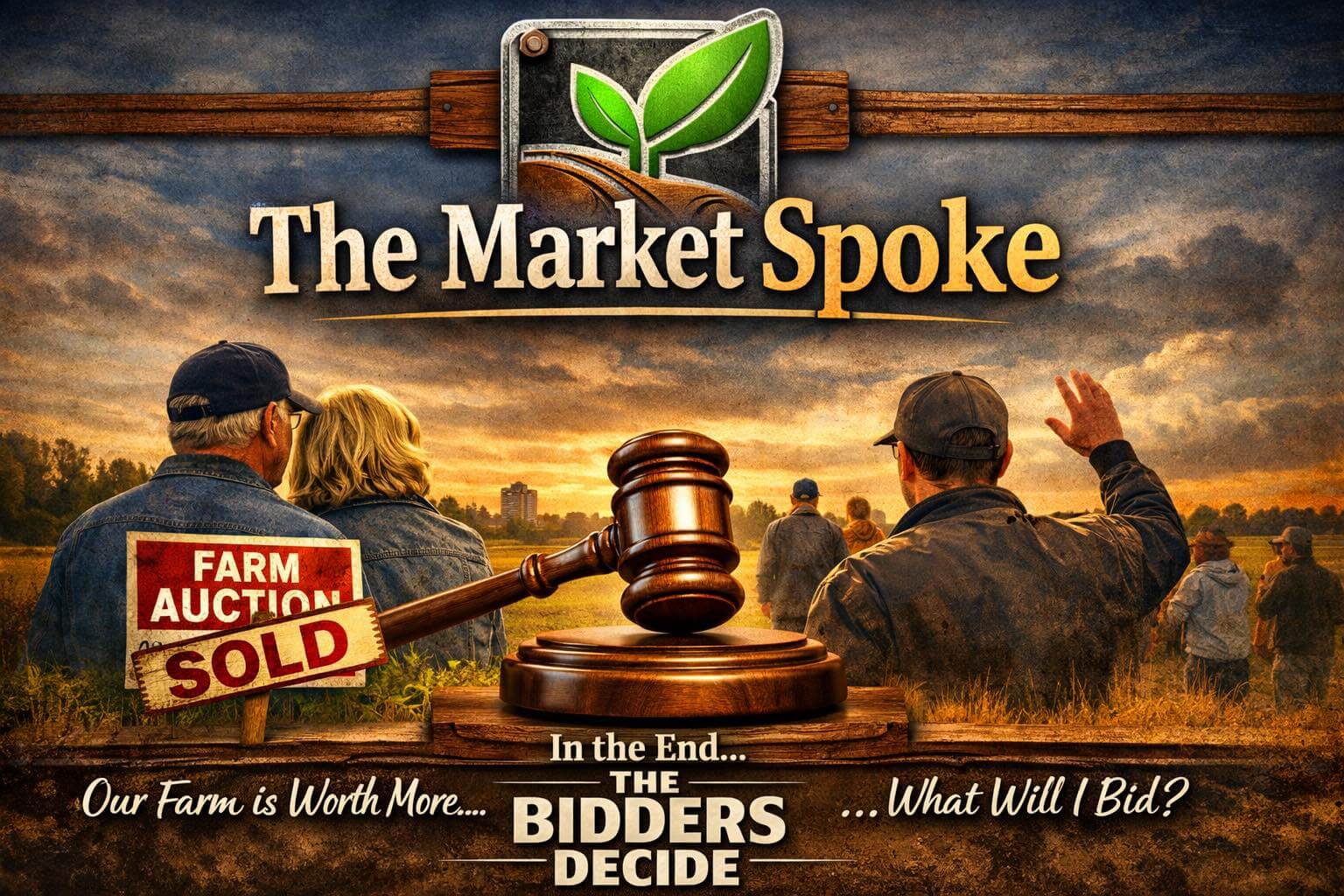
Selling farmland often comes with expectations. Many landowners have a number in mind long before the sale ever happens.
Recently, we managed a farmland auction for a family that had spent a long time preparing to sell their property. Like many farm families, they believed the land was worth a certain amount.
And their belief made sense.
The farm had been in their family for years. They had watched farmland values rise across the Midwest, and they had heard about strong land sales happening in their region.
But farmland markets — like all markets — ultimately determine value in only one way: what real buyers are willing to pay.
Jason J Smith
Auctioneer & Land Broker
Jason is an experienced farmland broker and auctioneer with extensive experience in farmland sales across this Midwest. Jason has worked with hundreds of clients to create advantageous outcomes. If you are selling land schedule a consultation with Jason by calling or using the calendar.
Phone: 515-537-6633 Email: Jason@dreamdirt.com
Preparing a Farm for Auction
Before any farmland auction, the goal is to give the market every possible opportunity to respond.
In this case, the farm received full exposure:
-
Extensive marketing and advertising
-
Multiple weeks of lead time before the auction
-
Outreach to serious farmland buyers and investors
-
Phone calls and conversations with interested bidders
In total, we received over 60 inquiries about the property.
Every major advertising channel was used to ensure potential buyers knew about the opportunity.
In other words, the market had every chance to respond.
And it did.
Auction Day: The Market Responds
Auction day arrived and bidders showed up ready to participate.
The farm was offered in tracts and competitive bidding began. There was strong interest and active participation — exactly what you hope to see when selling farmland at auction.
But when the bidding stopped, the final numbers came in lower than what the family had hoped for.
That’s when one of the most important moments in the auction process happens.
The Moment Sellers Face the Market
After the auction, we sat down together to review the bids.
This can be one of the hardest parts of selling land.
Farm families have history with their property. There are memories, years of work, and emotional connections attached to the ground.
When the numbers came in, the family said they believed the farm was worth more.
That’s when I told them something I’ve said many times over the years:
“The market spoke. If it’s worth more, why didn’t they bid more?”
That statement isn’t meant to be harsh.
It’s meant to be honest.
And it protects the integrity of the auction process for both sellers and buyers.
How Farmland Value Is Really Determined
One of the realities of selling farmland is this:
No one can simply declare what land is worth.
Not the auctioneer.
Not the seller.
Not even recent comparable sales.
A seller can decide what they are willing to accept, but the true value of farmland is determined when real buyers compete with real money.
That’s what makes the farmland auction method so powerful.
It brings the market together and asks one simple question:
What will someone pay today?
Sellers set the rules.
Bidders set the price.
Why Auctions Work for Farmland Sales
When done correctly, farmland auctions create transparency and competition.
Every buyer has the same opportunity.
Every bid is visible.
Every participant knows the process is fair.
That’s important because buyers prepare for auctions too. They:
-
Study soil productivity
-
Analyze farm income potential
-
Review drainage and improvements
-
Arrange financing
-
Evaluate long-term investment returns
When buyers raise their hand to bid, they are making serious financial decisions.
The auction process should respect that effort.
When the Market Gives Its Answer
Sometimes the final price is higher than anyone expected.
Sometimes it lands right in line with expectations.
And sometimes it’s lower than what a seller hoped for.
When that happens, it doesn’t mean the farm isn’t good land.
It doesn’t mean the marketing failed.
It simply means that at this moment in time, with the buyers participating that day, the market gave its answer.
And that answer represents real economics — not speculation.
The Bottom Line
At the end of the day:
The auctioneer doesn’t set the price.
The seller doesn’t truly set the price either.
The bidders do.
And when the bidding stops, the market has spoken.
Thinking About Selling Farmland?
If you’re considering selling farmland and want to understand your options — whether by auction or listing — we’d be glad to visit with you about the market.
Jason Smith
Broker & Auctioneer
515-537-6633
Jason@dreamdirt.com
Land Value Resources:
Farmland values across the country are tracked annually by the USDA National Agricultural Statistics Service, which reports on national and state-level trends in agricultural land prices.
Each year, the Iowa State University Extension and Outreach Land Value Survey provides a snapshot of farmland price trends across Iowa.
Our past auction results can be found here.
Request a Valuation for Your Farm or Land Property
Whether you’re ready to start the selling process, or even remotely curious, we will gladly provide you with a free consultaiton with a complementary Market Analysis! If you are in a position to sell land in the Midwest, we want to help you achieve the top of the market on your sale.
Soil Productivity Ratings Explained: CSR2, PI, and What They Mean for Farmland Value
When it comes to selling farmland, one of the most misunderstood topics is soil productivity ratings. A question I hear all the time from landowners is: “If I take better care of my soil, will my productivity rating go up?” The answer is simple: No. But understanding...
How Farmland Really Gets Its Price
Most people assume selling farmland through a listing is the “normal” way to sell land.You set a price, put up a sign, list it online, and wait for buyers to come along. But the reality is very different. A traditional listing is really just a series of one-on-one...
Why Estate Farms Often Bring the Strongest Bidding
When Generations of Buyers Have Been Waiting for One Opportunity In the farmland market, not all properties attract the same level of buyer interest. One pattern that consistently stands out is how estate farms often generate some of the strongest bidding activity in...